Category: Refined Living

aa-15-1280x854.jpg

3min12140
The Senate of the University of Abuja has approved the expulsion of 28 students over offences including cult-related activities, examination malpractice, drug possession and threats to life. The decision was reached at the institution’s 191st Regular Senate Meeting after deliberation on a report presented by the Student Disciplinary Committee. In a statement issued on Sunday by the Acting Director of Information and University Relations, Dr Habib Yakoob, the university said the affected students were found guilty of serious misconduct. The offences include assault, conspiracy, burglary, theft, falsification of ‘O’ Level results uploaded on the university portal for admission, as well as possession and use of hard drugs. The Senate also approved the withdrawal of certificates earlier awarded to 15 former students who failed to honour repeated invitations by the disciplinary committee. Meanwhile, nine students were cleared of wrongdoing after investigations, while 33 others received warnings for offences such as hostel racketeering, conspiracy and fighting. Reacting to the development, the Vice-Chancellor and Chairman of Senate, Prof. Hakeem Fawehinmi, said the university would not compromise its standards or tolerate actions that undermine academic integrity and campus safety. “The academic integrity of the university is sacrosanct, and we are determined that anyone who violates it will be appropriately sanctioned. Our goal is not only to enforce discipline but also to guide our students towards responsible citizenship and academic excellence,” he said. Fawehinmi added that the institution remains committed to providing a safe and conducive learning environment, noting that efforts are being intensified in student engagement, counselling and orientation programmes to promote responsible conduct and prevent future infractions. The move signals a renewed crackdown by the university management on indiscipline amid growing concerns over cultism, examination fraud and other criminal activities in tertiary institutions nationwide.

Tech & Tools Desk21 February 2026
zz-17.jpeg

2min8350
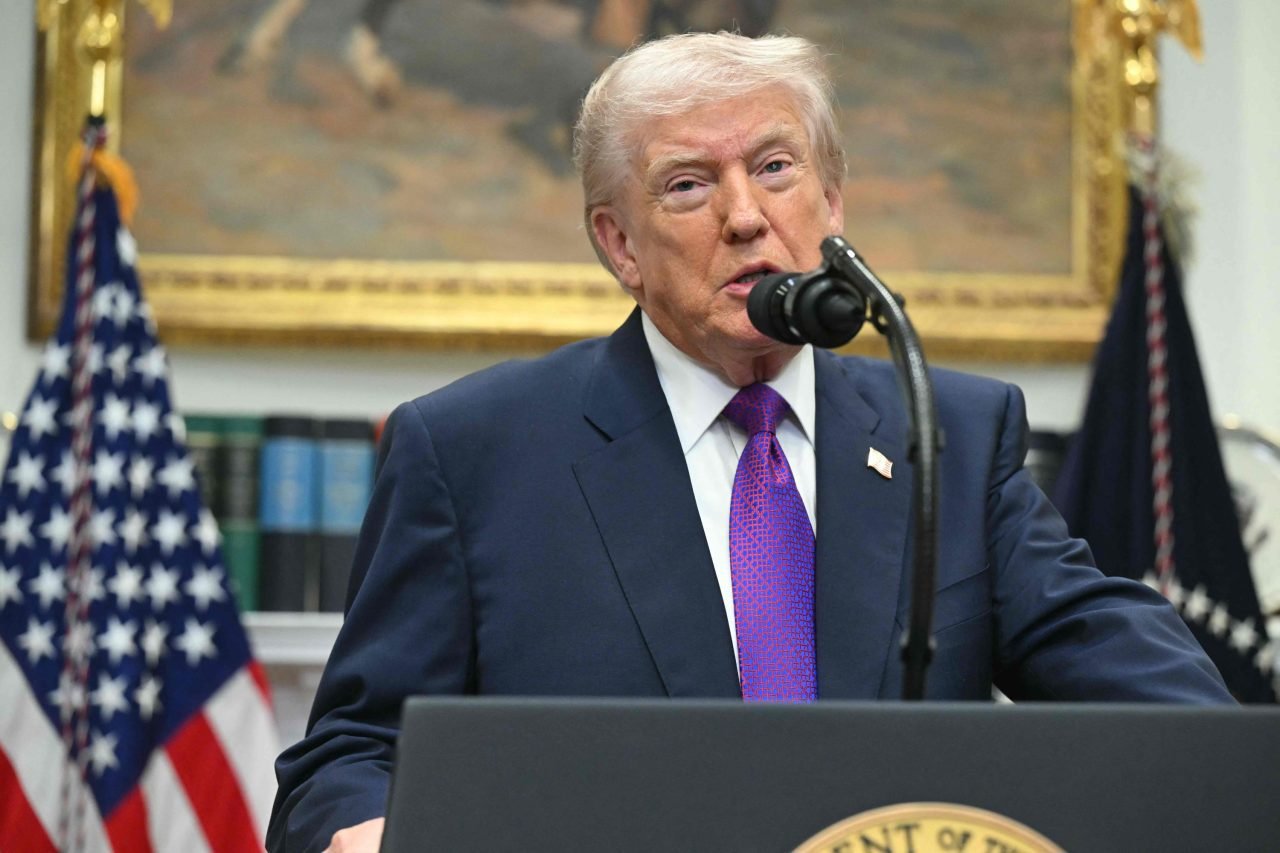
Donald Trump has put forward a proposal that could halt work permits for asylum seekers for years, marking what could become one of the most significant changes to asylum-related employment policy in decades. The draft regulation, released Friday by the US Department of Homeland Security (DHS), would suspend the issuance of work permits for new asylum applicants until average processing times for certain asylum cases fall to 180 days or less. According to DHS estimates based on the current backlog, reaching that benchmark could take anywhere from 14 to 173 years. However, the department noted that administrative reforms and efficiency improvements could accelerate the process. In a statement, DHS said the proposed rule, if finalised, would help curb “frivolous, fraudulent, or otherwise meritless asylum claims.” The agency emphasised that employment authorisation is discretionary and “not an entitlement,” resting with the DHS secretary. Under the proposal, migrants who entered the United States illegally would generally be ineligible for new work permits and would also be barred from renewing existing authorisations. The measure is expected to draw significant debate as it moves through the regulatory process.

James Obasi21 February 2026
images-1280x577.webp

5min5560
The National Peace Commission (NPC) has cautioned political actors and stakeholders against vote-buying and rising insecurity ahead of the June 20, 2026 governorship election in Ekiti State. The commission urged security agencies to take proactive measures to curb kidnapping and interpersonal violence, describing them as significant threats to voter participation and the credibility of the electoral process. Speaking on Friday in Ado Ekiti at a three-day Stakeholders’ Validation Forum, NPC Project Manager Asabe Ndahi said conflict prevention remains vital to safeguarding Nigeria’s democratic institutions. The forum was organised by the commission through its secretariat, the Kukah Centre, with support from the European Union, and drew participants from security agencies, political parties, civil society organisations, faith leaders, traditional rulers, media practitioners and community representatives. Ndahi explained that the validation forum was aimed at strengthening local ownership of electoral risk assessments and developing practical strategies to prevent violence. She reaffirmed the NPC’s commitment to collaborating with electoral authorities, security agencies and community stakeholders to promote dialogue, preventive engagement and adherence to peace accords before, during and after the election. According to her, the commission will deploy evidence-based interventions, mediation initiatives and peace advocacy programmes to ensure the poll is peaceful, credible and reflective of the people’s will. NPC Senior Programmes Manager Esrom Ajanya also warned that vote-buying continues to undermine democratic participation and accountability in the state. He noted that the practice, which has been widely reported in previous Ekiti elections, has entrenched transactional politics. “Vote-buying, previously documented as pervasive in Ekiti elections, has normalised transactional politics. When votes become commodities, policy debates weaken and civic motivation declines. This dynamic is reflected in turnout trends,” Ajanya said. He attributed declining voter turnout to growing distrust in political institutions, economic hardship and dissatisfaction among political elites. Ajanya observed that voter participation in Ekiti dropped from over 50 per cent in the 2014 governorship election to below 37 per cent in 2022, despite high political awareness among residents. Security concerns were also identified as factors discouraging electoral participation. NPC Monitoring, Evaluation and Training Officer Deborah Obafemi disclosed that Ekiti recorded eight security incidents across six local government areas between August 2025 and January 2026, resulting in two fatalities. Although none of the incidents were directly classified as election-related, she warned that kidnapping and recurring interpersonal violence pose indirect risks to election logistics, voter confidence and the mobility of electoral personnel. “Even though there were no overt electoral violence incidents in the dataset, the patterns recorded, particularly kidnapping and repeat interpersonal violence, represent measurable indirect threats to election logistics, turnout confidence and the willingness of communities and ad-hoc staff to move freely during electoral periods,” Obafemi said. She called on security agencies to implement hotspot-focused deterrence strategies, intensify patrols in kidnapping-prone areas during the pre-election period and strengthen intelligence monitoring of rural travel routes and farming communities. Obafemi also advised the Independent National Electoral Commission to review deployment schedules and operational movements to minimise exposure to high-risk corridors, while reinforcing security at collation centres and during the transportation of election materials at the local government level. Participants at the forum emphasised the need for responsible political conduct, conflict-sensitive media reporting and sustained civic education to guarantee a peaceful electoral process. They stressed that strengthening democratic participation and reducing electoral violence would be crucial to delivering a credible and inclusive governorship election in Ekiti State.

James Obasi20 February 2026
zz-10-1280x853.jpg

3min3590
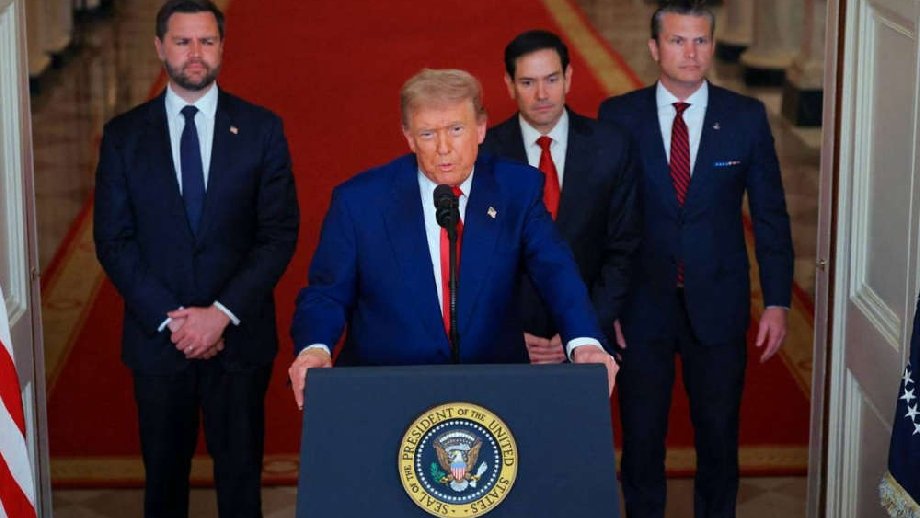
US President Donald Trump has warned that the world will know within “probably the next 10 days” whether the United States will reach a deal with Iran or consider military action. Speaking at the first meeting of his Board of Peace in Washington DC, Trump said regarding negotiations over Iran’s nuclear program: “We have to make a meaningful deal; otherwise, bad things happen.” In recent days, the US has increased its military presence in the Middle East, even as reports emerged of progress in talks between American and Iranian negotiators in Switzerland. Iran has informed the UN Secretary-General that it would consider US bases in the region legitimate targets if used for military aggression against the country. Tehran’s UN mission stressed in a letter that while it does not want war, Trump’s comments highlight the real risk of conflict. Some Democratic lawmakers, along with a few Republicans, have voiced opposition to any military action in Iran without congressional approval. Trump noted that Special Envoys Steve Witkoff and Jared Kushner, his son-in-law, had held “some very good meetings” with Iranian officials. He added, “It’s proven to be, over the years, not easy to make a meaningful deal with Iran. Otherwise, bad things happen.” White House press secretary Karoline Leavitt had earlier urged Iran to be “very wise” in negotiating, emphasizing that the administration still hoped for a diplomatic resolution to Tehran’s nuclear ambitions. The Board of Peace, initially announced to help end the two-year war between Israel and Hamas in Gaza and oversee reconstruction, has recently taken on a broader remit, prompting speculation that it may operate independently of the United Nations. US forces have been bolstering their presence in the region, including deploying the aircraft carrier USS Abraham Lincoln. Satellite imagery indicates Iran has also reinforced its military facilities, and Supreme Leader Ayatollah Ali Khamanei has issued social media warnings threatening US forces. Several US lawmakers have stressed that a conflict with Iran could be disastrous. California Democrat Ro Khanna and Kentucky Republican Thomas Massie said they plan to push for a congressional vote under the 1973 War Powers Act, which allows Congress to limit presidential authority to engage in armed conflict. Khanna warned that thousands of US troops could be at risk, and that Iran’s military capabilities make any war “catastrophic.” However, analysts note that the likelihood of such a resolution passing in both chambers of Congress is low. A similar measure was blocked in January when Senate Republicans prevented a vote requiring approval for further US military operations in Venezuela following the capture of Nicolás Maduro.

t-and-oillll.jpg

3min9690
Most Asian stock markets declined on Friday while oil prices climbed after Donald Trump heightened Middle East tensions by warning of possible military action against Iran if it failed to reach a “meaningful deal” in ongoing nuclear negotiations. The comments fuelled geopolitical unease and dampened a tentative market recovery following an AI-driven sell-off earlier in the month. Investors were also cautious ahead of key US economic data due later in the day, which is expected to offer fresh insight into the health of the world’s largest economy. Recent data releases that exceeded expectations have improved confidence in the economic outlook but reduced hopes for further interest rate cuts. Speaking at the inaugural meeting of his so-called “Board of Peace,” an initiative aimed at promoting stability in Gaza, Trump said Tehran must agree to a deal, warning that failure to do so could have serious consequences. He made the remarks as the United States moved warships, fighter jets and other military assets into the region, adding that Washington could “take it a step further” if talks collapsed. Israeli Prime Minister Benjamin Netanyahu also issued a warning, saying any attack by Iran would be met with a response of unprecedented scale. The rhetoric followed a second round of Oman-mediated talks between the United States and Iran in Geneva, part of efforts by Washington to prevent Tehran from acquiring nuclear weapons—an ambition Iran continues to deny. Fears of potential conflict in the oil-rich Middle East have driven crude prices sharply higher this week, with gains extending on Friday to their highest levels since June. Equity markets across Asia reacted nervously. Hong Kong stocks fell on reopening after a three-day holiday, while markets in Tokyo, Sydney, Wellington and Bangkok also posted losses. Seoul, however, advanced to a fresh record on continued technology sector buying, with gains also recorded in Singapore, Manila and Mumbai. City Index analyst Matt Simpson said the situation appeared more like strategic pressure than an imminent military campaign, noting that diplomacy remained active despite the heightened military posture. Meanwhile, shares in Jakarta slipped even after the United States and Indonesia reached a trade agreement following months of negotiations. The deal sets a 19 percent tariff on Indonesian exports to the US, down from a previously threatened 32 percent. Indonesia also agreed to purchase $33 billion worth of US energy products, agricultural goods and aviation equipment, including Boeing aircraft. Market snapshot (around 0700 GMT): Tokyo (Nikkei 225): down 1.1% Hong Kong (Hang Seng): down 0.7% Shanghai: closed for holiday WTI crude: up 0.9% at $67.05 per barrel Brent crude: up 0.9% at $72.27 per barrel Euro/dollar: $1.1756 Pound/dollar: $1.3448 Dollar/yen: 155.17 New York (Dow): down 0.5% London (FTSE 100): down 0.6%

zz-18-1280x731.webp

5min5210
The Socio-Economic Rights and Accountability Project (SERAP) has asked the Federal Capital Territory High Court sitting in Maitama, Abuja, to dismiss the ₦5 billion defamation suit instituted against it by officials of the Department of State Services (DSS). While adopting its final written address before Justice Yusuf Halilu, SERAP argued that the claimants failed to prove that the alleged defamatory publication was directed at them personally. The suit, marked FCT/HC/CV/4547/24, was filed by Sarah John and Gabriel Ogundele against SERAP and its Deputy Director, Kolawole Oluwadare. The claimants are seeking ₦5 billion in damages, ₦50 million as legal costs, a public apology to be published on SERAP’s website and in national newspapers as well as broadcast on television, and 10 per cent annual interest on the judgment sum until full payment. They alleged that SERAP falsely reported that DSS operatives invaded its Abuja office in September 2024, a claim they said harmed their personal reputations and that of the agency. At the resumed hearing, counsel to SERAP, Victoria Bassey, while adopting the organisation’s final written address and reply on points of law, urged the court to dismiss the suit. She argued that under established legal principles, a plaintiff in a defamation case must show that the publication clearly referred to them. Citing Supreme Court authorities, she said where a plaintiff is not expressly named, it must be shown that reasonable readers would understand the publication to refer specifically to the claimant. Bassey maintained that the publication in question referred only to the DSS as an institution and did not mention the claimants’ names, ranks, units, or any personal identifiers. She submitted that the DSS is a national security agency with thousands of personnel and that statements directed at such a broad institution could not automatically amount to personal defamation against individual officers. She therefore urged the court to strike out the suit. Counsel to the second defendant, Oluwatosin Adesioye, also adopted his final written address and described the action as unfounded, urging the court to dismiss it in its entirety. He argued that although a person need not always be named in a defamatory publication, a claimant whose identity is not expressly stated must establish special circumstances linking the publication to them. According to him, the claimants failed to do so. He further noted that the alleged identification of the claimants through vague physical descriptions was insufficient, adding that during trial, a witness admitted that he only associated the publication with the claimants after being informed by the DSS, rather than from the publication itself. Adesioye stressed that defamation must be assessed based on the understanding of an ordinary reader at the time of reading the publication, not after receiving additional information. He maintained that the claimants failed to plead or prove that they were so widely known within the DSS that readers would immediately associate the publication with them. Counsel for the claimants, Akinlolu Kehinde (SAN), in adopting their final written address dated January 30, 2026, urged the court to grant all the reliefs sought. He challenged the competence of the second defendant’s written address, arguing that it exceeded the page limit prescribed by the court rules and should therefore be discountenanced. On the substantive issue, Kehinde contended that the publication did in fact refer to the claimants, arguing that under the principle of innuendo, a defamatory statement may be established if persons with relevant background knowledge could identify the claimants as the subjects of the publication. In response, counsel to the second defendant argued that the court rules did not prescribe any specific penalty for exceeding page limits and that the court retained the discretion to overlook such irregularities in the interest of substantial justice. He also pointed out that the claimants’ own final address exceeded the permitted page limit. In his remarks, Justice Halilu observed that written addresses could not substitute for evidence already placed before the court. He noted that addresses are meant to assist the court in understanding the law in relation to the evidence, stressing that the court would ultimately be guided by the evidence on record. The judge thereafter reserved judgment in the matter.


zz-8.jpg

3min4170
The Nigerian Bar Association (NBA) has expressed readiness to step in over the arrest and detention of former presidential aide and lawyer, Chief Okoi Obono-Obla, amid concerns about the circumstances surrounding his apprehension. The Cross River State Police Command confirmed that Obono-Obla was arrested on Thursday over allegations related to forgery and the alleged acquisition of admission, professional qualifications, and entry into the legal profession through false representation. In a statement issued on Thursday, the police spokesperson, Eitokpah Sunday, said Obono-Obla was arrested at about noon on February 19, 2026, along Abuja Park in Ugep, Cross River State. The police dismissed reports circulating on social media suggesting that Obono-Obla was abducted or taken away by unknown persons in Ugep, Yakurr Local Government Area. According to the command, the arrest was carried out lawfully by police operatives following a petition submitted to the Commissioner of Police alleging offences bordering on forgery and false pretence in relation to legal practice. The statement added that the arrest was conducted in line with existing laws and within the constitutional and statutory powers of the Nigeria Police Force to investigate alleged criminal acts. Following his arrest, Obono-Obla was taken to the State Criminal Investigation Department in Calabar, where investigations are ongoing. The police noted that his legal counsel had been informed and was actively involved in the process, while members of his family were also aware of his whereabouts. Reacting to the development, the Chairman of the Calabar Branch of the Nigerian Bar Association, Enome Amatey, said the association was aware of the incident but had not yet received official details regarding the agency responsible for the arrest. He described the situation as unclear and worrisome, noting that reports surrounding the arrest were still sketchy. Amatey said the NBA was concerned about the need to safeguard Obono-Obla’s fundamental rights, stressing that he should be given a fair opportunity to defend himself and have unhindered access to legal representation. He added that the association would closely monitor the situation to ensure due process was followed and that Obono-Obla was not held beyond the constitutionally allowed period without lawful justification. According to him, the NBA would seek a detailed briefing on the matter and, if necessary, activate its human rights committee to take appropriate steps.

Tech & Tools Desk20 February 2026
zz-7.jpg

4min5740
Justice Ambrose Lewis-Allagoa of the Federal High Court in Lagos has issued an interim Mareva injunction freezing copyright levy funds due to the Musical Copyright Society of Nigeria (MCSN). The order bars the Central Bank of Nigeria (CBN) and 20 commercial banks from releasing or disbursing the funds pending further proceedings. The ruling, delivered on February 9, 2026, followed an ex parte application filed on February 5, 2026, in Suit No. FHC/L/CS/207/2026 by the Record Label Proprietors’ Initiative alongside 11 major record labels and music companies. The plaintiffs are Mavin Records Ltd; Davido Music Worldwide Ltd; Premier Music Publishing Limited; Chocolate City Music Limited; Hypertek Digital Limited; Digital Music Commerce & Exchange Limited; Beggars Group Media Limited; Universal Music Group; Sony Music Entertainment Africa; Warner Music South Africa Ltd; and Gamma Media Middle East. The 2nd to 12th plaintiffs instituted the action through their authorised attorney, the Record Label Proprietors’ Initiative. Arguing the application, counsel to the plaintiffs, Oragwu Nnamdi, urged the court to preserve the disputed funds pending the hearing of the substantive Motion on Notice. He requested an order restraining the CBN from disbursing, transferring, or otherwise paying out any copyright levy funds attributable to sound recordings and earmarked for MCSN until the Motion on Notice is determined. Nnamdi also asked the court to restrain MCSN, whether directly or through its agents, from receiving, accessing, withdrawing, transferring, dissipating, or otherwise dealing with the levy funds, whether paid directly by the CBN or through commercial banks. In addition, the applicants sought an order directing the CBN and the affected banks to preserve the funds and file affidavits of compliance within three days of service, disclosing the amounts standing to the credit of MCSN in respect of the levy payments. After considering the submissions and reviewing the affidavit evidence sworn to by Dr Chinedu Chukwudi, Justice Lewis-Allagoa granted all the reliefs sought. In a brief ruling, the judge restrained the CBN, its officers, agents, or anyone acting on its authority from disbursing any copyright levy funds attributable to sound recordings and payable to MCSN pending the determination of the Motion on Notice. The court further barred MCSN from receiving, accessing, using, withdrawing, transferring, converting, dissipating, or otherwise dealing with the funds, whether already received or yet to be disbursed. Justice Lewis-Allagoa also ordered the CBN and the listed banks to preserve the disputed sums and file affidavits of compliance within three days, detailing the amounts standing to the credit of MCSN in respect of levy payments already made or awaiting disbursement. Additionally, the court directed that any copyright levy funds already received by MCSN and attributable to sound recordings owned by the 2nd to 12th plaintiffs after they had validly opted out of collective management of their rights must be preserved intact. MCSN was also ordered to render an account of such funds and to refrain from any further dealings with them pending the hearing of the Motion on Notice. The case was adjourned to March 12, 2026, for the hearing of the Motion on Notice.

Zara Lianne20 February 2026
zz-6.jpg

3min9370
Fresh anxiety has enveloped Utono community in Ngaski Local Government Area of Kebbi State after a letter allegedly sent by suspected terrorists surfaced, demanding a payment of ₦100 million as a condition to allow them access to the town to “preach.” The development comes amid heightened security worries in parts of Kebbi and neighbouring states, where armed groups have been linked to attacks, abductions, and extortion in rural areas. According to reports, the letter was delivered to community leaders in the early hours of Thursday, with the authors cautioning residents against dismissing the threat. “This is not a joke. We are coming to preach. You must pay us ₦100 million,” the message reportedly stated. The group also made reference to an earlier incident in Woru community in Kiama Local Government Area of Kwara State, where several people were allegedly killed after a similar warning was ignored. A resident, who requested anonymity due to security concerns, said the message has triggered panic within the community. Confirming the development, the Chief Press Secretary to the Kebbi State Governor, Alhaji Ahmed Idris, said the state government has taken swift action to avert any possible attack. He disclosed that he had spoken with the Director of Security, who confirmed the threat and assured that security personnel had been deployed to the area. Idris said the government was treating the matter with utmost seriousness, adding that security agencies, supported by aerial surveillance, had been mobilised to safeguard the community. He stressed that the state government remains fully committed to protecting lives and property, noting that the governor has continued to prioritise security across the state. Kebbi State, like several others in the North-West, has experienced sporadic attacks by armed groups in recent years, particularly in remote communities targeted for ransom and other criminal activities. Security authorities say intensified operations are ongoing to prevent further incursions and reassure residents. As of the time of filing this report, security presence had reportedly been strengthened in Utono and surrounding communities, while residents remain on high alert.

Tech & Tools Desk19 February 2026
zz-2.avif

4min3570
Former South Korean president Yoon Suk Yeol has been sentenced to life imprisonment after a Seoul court found him guilty of leading an insurrection by attempting to impose military rule. The court ruled that on 3 December 2024, Yoon sought to undermine the constitution by deploying troops to seal off the National Assembly and ordering the arrest of political opponents. Presiding judge Ji Gwi-yeon said Yoon’s actions severely damaged the country’s democracy and warranted the harshest punishment. Prosecutors had pushed for the death penalty. Although the martial law declaration lasted only hours, it deepened political divisions nationwide. Large crowds of Yoon’s supporters gathered outside the courthouse ahead of sentencing, waving banners and chanting in his favor. Many were visibly emotional after the verdict. Anti-Yoon demonstrators were also present, calling for capital punishment. Yoon showed little reaction as the sentence was delivered. His legal team argued that the ruling lacked sufficient evidence and accused the judge of delivering a predetermined judgment. If either side appeals, the case will move to the Supreme Court, potentially delaying a final decision for months. Yoon stunned the nation when he announced martial law during a live television broadcast, claiming it was necessary to counter “anti-state” forces allegedly sympathetic to North Korea. However, critics argued the move was driven by mounting domestic pressures, including a hostile opposition-controlled parliament and corruption allegations involving his wife, Kim Keon Hee. Lawmakers forced their way into the National Assembly and overturned the order within hours, triggering months of political turmoil. Yoon was later impeached and indicted alongside several senior officials. Former prime minister Han Duck-soo received a 23-year sentence for his role in the plot, while ex-defence minister Kim Yong-hyun, who reportedly advised Yoon to impose martial law, was sentenced to 30 years. Other senior officials, including former interior minister Lee Sang-min, former intelligence commander Roh Sang-won and ex-police chief Cho Ji-ho, were also jailed in what judges described as “an insurrection from the top.” Security was tight around the courthouse, with police buses forming barricades and around 1,000 officers deployed. Throughout the trial, Yoon maintained that he had constitutional authority as president to declare martial law, arguing that the move was necessary to protect the country’s sovereignty and freedom. The ruling Democratic Party, which won the presidency following his removal from office, criticized the life sentence as too lenient and said justice had not been fully served. South Korea has not carried out an execution since 1997, meaning even a death sentence would likely have resulted in life imprisonment. Yoon is already serving time for separate convictions related to abuse of power and obstructing his arrest, and he still faces additional trials. Several former South Korean presidents have previously been jailed but later pardoned after serving a few years raising speculation that Yoon could eventually receive similar clemency.